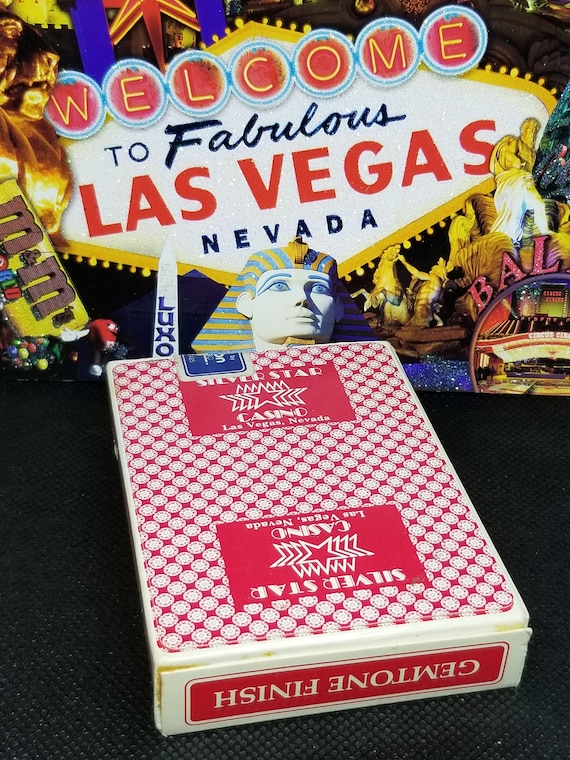
Las Vegas in the 1970s was a laboratory of neon, velvet, and pasteboard. Casinos ordered enormous volumes of playing cards from USPCC and other manufacturers, cycling decks after a few hours of play to deter marking and collusion. What looked like waste from the pit became treasure in the hands of collectors who understood that a humble Bee or Bicycle back could carry the fingerprint of a vanished room on the Strip.
Security theatre in paper form
Casino decks from this era often feature distinctive borderless backs, jumbo or standard faces, and cancellation holes or clipped corners meant to render a deck unusable if it left the property. In practice, not every deck met the punch or the corner snip: some slipped into employee hands, gift bags, or the secondary market with seals still intact. That ambiguity is exactly what makes provenance research interesting—two identical boxes can tell opposite stories depending on how they left the building.
Collectors learn to read cancellation style the way archivists read bindings. A drill pattern, a diagonal clip, or a sharpie slash across the seal each implies a different era and house policy. Combined with tax stamps and tuck typography, those marks help place a deck in a narrow window of manufacture and use.
Iconic rooms and the decks they ordered
Venues like Jerry's Nugget, the Dunes, and the Stardust live on in tuck art, back designs, and the oral history of dealers and tourists. Not every property commissioned a fully custom face; many used standard USPCC casino stock with property-specific jokers or a simple logo plate change. Even so, the pairing of a familiar back with a rare tax stamp or a discontinued seal can move a box from "common casino" to "grail adjacent" overnight when documentation appears.
Regional casinos outside Nevada followed similar logics—Atlantic City, riverboats, and tribal gaming in its early phases all consumed cards at industrial scale. The 1970s sit at a sweet spot: modern enough for crisp printing and consistent quality, yet old enough that digital surveillance and continuous shufflers had not flattened the material culture of the table.
Condition, fakes, and the authentication mindset
Factory-wrapped casino stock from the 1970s is exceedingly rare; most surviving examples show shelf wear, nicotine tint, or sharpie marks from the pit. Authentication relies on matching known print runs, comparing seal styles, understanding when properties switched suppliers, and—where possible—lining up paperwork or contemporaneous photographs. The hobby has seen rewrapped decks, fantasy tucks, and "souvenir" copies that borrow legitimate backs; patience and side-by-side comparison remain the collector's best tools.
We encourage newcomers to handle common reference decks before chasing high-ticket lots. Feeling correct stock weight and finish builds a baseline that photographs alone cannot teach. When in doubt, pause: a story that is too perfect often deserves a second look at the seal glue and the edge bevel.
From the pit to the display case
For many enthusiasts, a crisp 1970s casino deck is a tactile postcard from the last golden age of analog gaming—long before RFID tables, player tracking, and machine shufflers redefined the rhythm of the floor. Whether you collect sealed, opened, or cancelled examples, you are preserving labour practices, graphic standards, and a chapter of leisure history that was never meant to be archival.
At TurretDecks by Sterling Thames Media we treat casino pasteboard as both artifact and lesson: the same object that once flew across felt now teaches how institutions branded chance, how workers enforced rules with a corner clip, and how collectors turned industrial discard into cultural memory.